Sunday, 28 August 2022

Class 10 Science Chp 2 Activities Solutions


Class 10 Science

Chapter 2 Acids, Bases and Salts

Activities Solutions

Activity 2.1

Procedure: Activity 2.1 asks us to test various acids and bases with various reagents one by one and see the result.

Explanation: Various reagents mentioned here are PH indicators. We find its use them in chemistry practicals.

Blue Litmus Paper: It is a reagent to test for basic PH. In acidic PH it turns red.

Red litmus paper: It turns blue in basic PH.

Phenolphthalein: (Pronunciation: L Silent) It is a colourless reagent. It turns pink in basic PH.

Methyl Orange: It is a narrow range PH indicator. At PH below 3.1 it is red and PH above 4.4 it is Yellow.

Observation: Stronger acids like Hydrochloric acid, Sulphuric acid, Nitric acid have very acidic PH. So, it turns blue litmus into red and gives a red solution with methyl orange.

Similarly, Stronger bases like sodium hydroxide, calcium hydroxide, potassium hydroxide, magnesium hydroxide, and ammonium hydroxide turn the red litmus into the blue. With phenolphthalein, they give a pink solution and with methyl orange they give a yellow solution.

For weak acid and bases:

The PH of weak acids and bases depends on their concentration.

For example

Acetic acid: The 1M solution has a PH of 2.88. So It turns Blue litmus Red. Phenolphthalein indicates only basic PH so there is no change in the colour with phenolphthalein. It turns methyl orange into the red.

Inference/conclusion: Different PH indicators give different colour with the acids and bases. An acid turns the blue litmus paper red while a base reveres this. Bases give red colour with phenolphthalein while with methyl orange it gives a yellow solution. Similarly, acids give red colour with methyl orange.

Application: We use indicators in an acid-base reaction to finding the endpoint. After completion of a reaction, any addition of a reactant changes the PH of the solution. If a suitable PH indicator is present in the solution, it changes the colour which marks the endpoint.

Some extra point: Salt of a strong acid and strong bases like sodium chloride have PH near 7.

Salt of Strong acid and a weak base, e.g. copper Sulphate (CuSO4) have acidic PH.

Similarly Salt of a Strong base and weak acid, e.g. Calcium carbonate (CaC03) have basic PH.

Activity 2.2

Brief Procedure: Activity 2.2 asks us to check the change in odour and colour of cloth soaked with onion and vanilla with acids and bases.

Observation: Bases deodorise onion and vanilla but do not change the colour.

Explanation:

The odour and colour of Onion:

Onion contains sulphurous allium. It gives the peculiar onion odour. It is acidic and reacts with bases like sodium hydroxide to give the odourless compound. So when we add bases to onion soaked clot, its smell disappears.

Allium does not react with acids, so when we add acids to onion soaked cloth smell remains in the cloth.

Colour of onion: There is no relation to the reaction and colour. So the colour remains the same.

The odour and colour of Vanilla:

Vanilla contains an aldehyde which gives it a pleasant odour. The aldehyde is also weak acids. They react with bases, and the smell disappears.

Similar to onion vanilla colour also has no relation with bases and acids. As a result, we do not see any changes in the colour of vanilla with acids or bases.

Application: You must have seen onion dipped in a red colour solution in home or restaurant. This red colour solution is potassium permanganate. It is a slightly basic salt. It deodorises the onion smell and also helps in preserving onion for a long duration.

Activity 2.3

Brief procedure: Activity 2.3 asks us to react zinc granules with various acids and observe the flammability of gas formed.

Observation: We see bubbles coming out vigorously with strong acids. This gas burn when we bring the candle to it.

Zinc also react with weak acids like acetic acid, but here gas formation is slow.

Explanation: Zinc reacts with acids and forms its salt and hydrogen gas. Hydrogen gas liberates as the bubble. When we bring the flame to this gas, it burns as hydrogen is highly flammable.

For example

Zn + H2SO4 ———> ZnSO4 + H2

Weak acid does not dissociate quickly in water. So its reaction with zinc is slower as compared to strong acids like Hydrochloric acid and sulphuric acid.

Activity 2.4

Procedure: Activity 2.4 asks us to treat zinc granules with bases like sodium hydroxide.

Observation: Bubbles come out from zinc granules. These bubbles catch fire when the flame is brought towards the test tube.

Explanation: Just like a metal reacts with acid (see Activity 2.3), metal also react to bases and produce hydrogen gas.

Here, zinc reacts with sodium hydroxide and forms the oxide of zinc with the evolution of hydrogen. The reaction is vigorous. So we use dilute bases to moderate the reaction.

Zn(s) + 2NaOH(aq) ———-> Na2ZnO2(s) + H2(g)

Inference: Metals react with bases and form hydrogen gas bubbles.

Activity 2.5

Procedure: Activity 2.5 asks us to react metal carbonates and metal hydrogen carbonate with acids and see if any gas evolves; check also if gas gives a precipitate with quick lime.

Observation:

When we add acid to carbonates and hydrogen carbonates of metal, bubbles start appearing from the carbonates. When we pass this air to a quick lime solution, it turns the lime water milky.


Class 10 Science Chp 1 Activities Solutions

Class 10 Science

Chapter 1 Chemical Reactions and Equations

Activities Solutions 

Activity 1.1 

Brief Procedure: Activity 1.1 asks us to burn Magnesium ribbon in a china dish and see what happens.

Observation: Magnesium ribbon burns spontaneously, and white ash deposits on the china dish.


Explanation:

Magnesium is a highly reactive metal. It reacts spontaneously with oxygen present in the atmosphere to form white ash of Magnesium oxide with the liberation of energy.

2Mg(s) + O2(g) ———> 2MgO(s)

Caution:

Magnesium can burn spontaneously like a cracker. Keep it away from the body during the experiment.

Activity 1.2

Brief procedure: Activity 1.2 asks us to mix an aqueous solution of lead nitrate with potassium iodide to check what happens.

Observation: A yellow colour precipitate appears at the bottom.

A dried precipitate of lead iodide   A yellow precipitate of lead iodide.

Explanation: Lead nitrate and potassium iodide; both are colourless. They react with each other to form a yellow precipitate of lead iodide. Lead iodide settles down at the bottom of the tube.

Pb(NO3)2(aq)+ 2KI(aq) → PbI2(s) + 2KNO3(aq)

Activity 1.3

Objective: The question ask to put zinc granules in the beaker containing acid either hydrochloric acid or sulphuric acid and ask for what we observe.

Observation: Air Bubbles comes out from the granules, and Conical flask becomes warm.

Air bubble come out from zinc

Inference: Zinc granules react with hydrochloric acid or sulfuric acid and forms hydrogen gas.

Zn(s) + 2HCl(aq) → ZnCl2(aq)+ H2↑ + heat

Zn(s) + 2H2SO4(aq) → ZnSO4(aq) + 2H2↑ + heat

Caution: Acids are corrosive and harmful for skin. Avoid touching them with bare skin.

Activity 1.4

Brief Procedure: This activity asks to put some quick lime (CaO) into the water and observe the reaction.

Observation: Beaker feel hot after adding water

Explanation: Quick lime reacts with water to form slaked lime. The process is exothermic and releases heat.

CaO(s) + H20(l) → Ca(OH)2(aq) + Heat

Application in whitewashing: Slaked lime reacts with the carbon dioxide present in the air. It forms Calcium carbonate which is a shiny compound. For example, Marble used in the home is also the same. So we use slaked lime as whitewash paint in home walls. After two to three days slaked lime convert to carbonate which gives the wall a shiny surface.

Ca(OH)2(aq) + CO2(g) ——–> CaCO3(s)  + H20(l)

Another fact: We all know human, and animals absorb oxygen from air and emit carbon dioxide. When we blow air from the mouth into slaked lime solution using a tube, an insoluble precipitate of calcium carbonate forms. This phenomenon confirms the presence of C02 in our breath.

Activity 1.5

: Activity 1.5 asks us to heat ferrous sulphate crystals (aka Green vitriol) in a test tube and see what happens.

Observation: The Green colour of ferrous sulphate changes to brown and peculiar sulphur smell comes out from the test tube.

Ferrous sulphate decomposes into ferric oxide

Inference: Heating ferrous sulphate on test tube leads to decomposition of ferrous sulphate into a ferric oxide which is brown. It also liberates sulphur dioxide gas which has a foul smell.

2FeSO4(S) ———-> Fe2O3(s) + SO2(g) + SO3(g)

Activity 1.6

Procedure: The question asks to heat an aqueous solution of lead nitrate into a test tube and see what happens.

Observation: A yellow precipitate of lead oxide form with the evolution of brown nitrogen dioxide gas which has an irritating smell.

Inference: Lead nitrate decomposes to lead oxide which is yellow. Nitrogen dioxide gas is liberated which has a brown colour and irritating smell.

2Pb(NO3)2(s) ———> 2PbO(s) + 4NO2(g) + O2(g)

Lead nitrate Heat Lead oxide Nitrogen oxide Oxygen

Activity 1.7

Procedure: The activity asks to electrolyse water using a 6-volt battery and check the volume of gases liberated at anode and cathode. The activity also asks to bring the gas at the flame and see what happens.

Observation:

1. Gas collected at the cathode (-) is twice that of gas collected at the anode (+).

2. When we bring the flame to the gas collected at the cathode, it burns immediately. While gas obtained at anode does not burn.

Inference: Electricity decomposes water into its component. Hydrogen atoms in water receive an electron from the cathode electrode and form hydrogen gas. Similarly, oxygen atoms in water lose electrons at the anode and form oxygen gas.

Explanation: We can explain this with the equation below.

2H2O ——> 2H2 + O2

Here you can see two molecules of hydrogen gas liberate with one molecule of oxygen. So the volume of hydrogen obtained is double the amount of oxygen.

Note: water is not highly conductive. We use a few drops of sulphuric acid here. It is done to increase the electrical conductivity of water. Instead of sulphuric acid, any other acid like hydrochloric acid or salt like sodium chloride can also work.


Activity 1.8

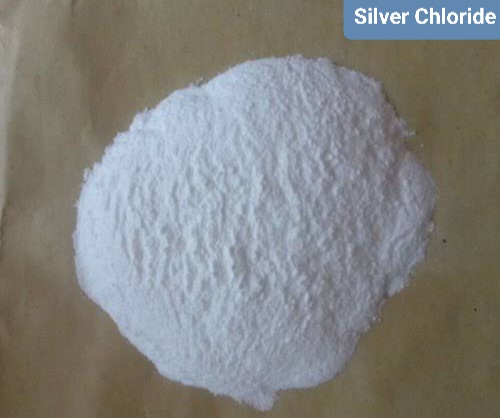
Procedure: The concerned activity asks us to put silver chloride in sunlight for a few minutes.

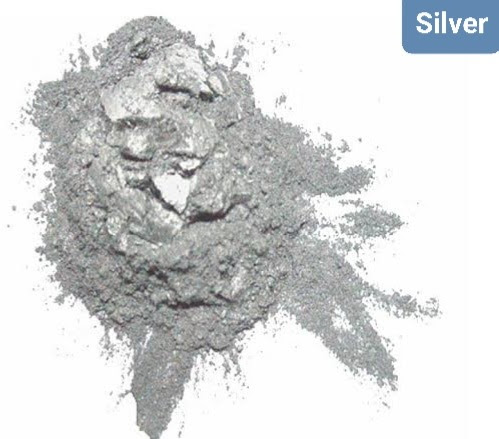
Observation: Colour of silver chloride turns grey from white.

Explanation: Silver chloride in presence of light decomposes to solid silver and chlorine gas. Elemental silver is grey in colour, so a grey colour appears.

                       ( Sunlight)

2AgCl(s) ———> 2Ag(s) + Cl2(g)

Application: Photographic film

Silver chloride (and all halides of silver) are photosensitive. They change the colour on exposure to light. This property is used in the photographic industry to make films. Films have a thin layer of silver chloride coated on them. When we click the camera, light passes through the lens to the film and image is imprinted on the film. Processing this film results in coloured photos which we keep in albums and posters.

Note: We prepare Silver chloride by mixing silver nitrate solution with sodium chloride solution. A milky white precipitate is the silver chloride.

AgNO3 + NaCl ———> AgCl↓ + NaNO3

Activity 1.9

Brief Procedure:

Activity 1.9 asks us to dip iron nails in a copper sulphate solution and check the colour of the solution.

Observation:  Colour of copper solution fades and nail becomes brown.
Explanation: Iron in nail displaces copper from the copper sulphate solution. As a result, solution fades in colour.
This displacement reaction results in the formation of elemental copper. Elemental copper deposits on the nail and impart a brown colour to the nail.

CuSO4(aq) + Fe(s) ——-> FeSO4(aq) + Cu(s)

Note: The faded blue apperance later change to green colour because ferrous sulphate is green.

Activity 1.10

Brief Procedure: Activity 1.10 asks us to mix the sodium sulphate solution with barium chloride solution.

Observation: A white precipitate of barium sulphate sinks at the bottom.

Explanation: Sodium sulphate and barium chloride undergo double displacement and form barium sulphate and sodium chloride. The reaction goes in the forward direction as barium sulphate formed is insoluble in water and sinks to the bottom.

Na2SO4 (aq)+ BaCl2(aq) —> BaSO4(white ppt.) + 2NaCl(aq)

Inference: Sodium sulphate and barium chloride undergo double-displacement reaction and form insoluble white barium sulphate precipitate.

Activity 1.11

Procedure: This activity asks us to heat copper powder in a china dish.


Observation: Surface of powder becomes black.

Explanation: All metals except gold and platinum are reactive elements. They react with various gases present in the atmosphere like oxygen, sulphur etc. These reactions take time. Heating metals hastens the reaction and we can easily observe the change during heating. Copper also reacts with atmospheric oxygen and forms a coating of its oxide on them. This oxide gives them a black appearance.

                                         Heat

2Cu(s) + O2(g) ————> CuO(s)

Some extra facts: Copper is used in many forms as wires; as kitchen utensils; in an idol etc. Oxidation of copper with times makes them black. Most of the time these products also have a green appearance. This phenomenon occurs due to the reaction of oxide with sulphur present in the atmosphere.

Acidic substances like vinegar, lemon remove this layer. So we use them to clean our copper products.


Saturday, 27 August 2022

Class 10 Science Chapter 9 Heredity and Evolution

Class 10 Science

Chapter 9 Heredity and Evolution

Introduction

→ Genetics deals with the study of Heredity and Variation.

→ The transmission of characters/traits from one generation to the next generation is called Heredity.

→ The differences in the characters/traits between the parent and offspring is called Variation.

Types of Variations

→ Variation are of two types:

(i) Somatic Variation

(ii) Gametic Variation

• Somatic Variation

→ It takes place in the body cell.

→ It is neither inherited nor transmitted.

→ It is also known as acquired traits.

→ Examples: cutting of tails in dogs, boring of pinna etc.

• Gametic Variation

→ Takes place in the gametes/Reproductive cells.

→ Inherited as well as transmitted.

→ Also known as inherited traits.

→ Example: human height, skin colour.

Accumulation of Variation during Reproduction

→ Variation occurs during reproduction whether organisms multiply sexually or asexually.

Variations in Asexual Reproduction

→ Variations are fewer.

→ Occurs due to small inaccuracies in DNA copying(Mutation).

Variations in Sexual Reproduction

→ Variations are large.

→ Occurs due to crossing over, separation of chromosomes, mutation.

Importance of Variation

→ Depending upon the nature of variations different individuals would have different kinds of advantage.

Example, Bacteria that can withstand heat will survive better in a heat wave.

→ Main advantage of variation to species is that it increases the chances of its survival in a changing environment.

→ Free ear lobes and attached ear lobes are two variants found in human populations.

Mendel and His Work on Inheritance

→ Gregor Johann Mendel (1822 & 1884) started his experiments on plant breeding and hybridisation. He proposed the laws of inheritance in living organisms.

→ Mendel was known as Father of Genetics.

→ Plant selected by Mendel: Pisum sativum (garden pea). He used a number of contrasting characters for garden pea


Medel’s Experimental Material
• He chose Garden Pea (Pisum sativum) as his experiment material because of:

→  Availability of detectable contrasting traits of several characters.
→ Short life span of the plant.
→ Normally allows self-fertilisation but cross-fertilisation can also be carried out.
→ Large no. of seeds produced.

• Mendel’s Experiments: Mendel conducted a series of experiments in which he crossed the pollinated plants to study one character (at a time).

Monohybrid Cross
→ Cross between two pea plants with one pair of contrasting characters is called a monohybrid cross.
Example: Cross between a tall and a dwarf plant (short).


→ First-generation or F1 progeny are no ‘medium-height’ plants. All plants were tall.

→ Second-generation or F2 are progeny (descendant) of the F1 tall plants are not all tall.

→ Both the tallness and shortness traits were inherited in the F1 plants, but only the tallness trait was expressed. Thus, two copies of the trait are inherited in each sexually reproducing organism.

→ These two may be identical or may be different depending on the parentage. 

Pure or homozygous condition

(TT, tt) : Both are dominant traits, Both are recessive alleles

Hetrozygous condition (Hybrid)

Tt : One is dominant, one ris ecessive trait

→ Phenotypic ratio: 3 : 1 (Three tall and one short)

→ Genotypic ratio : 1 : 2 : 1 (TT-one, Tt-two, tt-one)

Phenotype means Physical appearance either they are Tall or Short.Genotype means Genetic make up that are TT, Tt or tt.

Observations of Monohybrid Cross

(i) All F1 progeny were tall, no medium height plant. (Half way characteristic)

(ii)  F2 progeny ¼ were short, ¾ were tall.(iii) Phenotypic ratio F2 – 3 : 1 (3 tall : 1 short)

Conclusions

→ TT and Tt both are tall plants while tt is a short plant.

→A single copy of T is enough to make the plant tall, while both copies have to be ‘t’ for the plant to be short.

→ Characters/traits like ‘T’ are called dominant trait (because it express itself) and ‘t’ are recessive trait (because it remains suppressed).

Dihybrid Cross

A cross between two plants having two pairs of contrasting characters is called dihybrid cross.

• Parent → Round green × Wrinkled yellow


Phenotypic Ratio

Round, yellow : 9

Round, green : 3

Wrinkled, yellow : 3

Wrinkled, green : 1

Observations

(i) When RRyy was crossed with rrYY in F1 generation all were Rr Yy round and yellow seeds.

(ii) Self pollination of F1 plants gave parental phenotype and two mixtures (recombinants round yellow and wrinkled green) seeds plants in the ratio of 9 : 3 : 3 : 1.

Conclusions

→ Round and yellow seeds are Dominant characters.

→ Occurrence of new phenotype combinations show that genes for round and yellow seeds are inherited independently of each other.

How do these traits get expressed

→ Cellular DNA is the information source for making proteins in the cell.

→ A section of DNA that provides information for one protein is called the gene for that protein.

→ Plant height can thus depend on the amount of a particular plant hormone. The amount of the plant hormone made will depend on the efficiency of the process for making it.

• Cellular DNA (Information source)

→ For synthesis of Proteins (Enzyme)

→ Works efficiently → More Hormone

→ produced Tallness of plant

Therefore, genes control characteristics/traits.

Sex Determination

Determination of sex of an offspring is known as Sex Determination.

Factors responsible for Sex Determination

→ Environmental and Genetic factors are responsible for sex determination.

• Environmental

→ In some animals, the temperature at which the fertilized eggs are kept decides the gender. Example: Turtle

• Genetic

In some animals like humans gender or individual is determined by a pair of chromosomes called sex chromosome.

XX – Female

XY – Male

Sex Chromosomes

→ In human beings, there are 23 pairs of chromosome.

→ Out of these 22 chromosomes pairs are called autosomes and the last pair of chromosome that help in deciding gender of that individual is called sex chromosome.

XX – Female

XY – Male


→ This shows that half the children will be boys and half will be girls. All children will inherit an X chromosome from their mother regardless whether they are boys or girls.

→ Thus, sex of children will be determined by what they inherit from their father, and not from their mother.

Evolution

Evolution is the sequence of gradual changes which takes place in the primitive organisms, over millions of years, in which new species are produced.


Variations that resulted in formation of new species occurred basically due to errors in DNA copying as well as due to sexual reproduction.

An Illustration to show variations in a population: 

Situation I (Group of red and green beetles)


Colour variation arises during reproduction

All beetles red except one that is green

→ Crows feed on red beetle→ No. of beetles reducesOne beetle green→ Progeny beetles green→ Crows could not feed on green beetles as they got camouflaged (hide) in green bushes→ Number of green bettles increases

Conclusion

→ Green beetles got the survival advantage or they were naturally selected as they were not visible in green bushes.

→ This natural selection is exerted by crows resulting in adaptations in the beetles to fit better in their environment.

Situation II (Group of red and blue beetles)


Reproduction in group of red beetles → All beetles are red except one that is blue → Number of red beetles increases as they reproduces → One blue beetle reproduces and no. of blue beetles also increases → Crows can see both blue and red beetles and can eat them → Number reduces but still red beetles are more and blue ones are few → Suddenly elephant comes and stamps on the bushes → Now beetles left are mostly blue

Conclusion

→ Blue beetles did not get survivals advantage. Elephant suddenly caused major havoc in beetles population otherwise their number would have been considerably large.

→ From this we can conclude that accidents can change the frequency of some genes even if they do not get survival advantage. This is called genetic drift and it leads to variation.

Situation III (Group of red beetles and Bushes)


Group of red beetles → Habitat of beetles (bushes) suffer from plant disease → Average weight of beetles decreases due to poor nourishment → Number of beetles kept on reducing → Later plant disease gets eliminated → Number and average weight of beetles increases again

Conclusion

No genetic change has occurred in the population of beetle. The population gets affected for a short duration only due to environmental changes.

Acquired and Inherited Traits


Ways by which Speciation takes place

Speciation takes place when variation is combined with geographical isolation.

(i) Gene flow: Occurs between population that are partly but not completely separated.


(ii) Genetic drift: It is the random change in the frequency of alleles (gene pair) in a population over successive generations.

Genetic drift takes place due to:

→ Severe changes in the DNA

→ Change in number of chromosomes

(iii) Natural selection: The process by which nature selects and consolidate those organisms which are more suitable adapted and possesses favourable variations.

(iv) Geographical isolation: It is caused by mountain ranges, rivers etc. Geographical isolation leads to reproductive isolation due to which there is no flow of genes between separated groups of population.

Evolution and Classification

Both evolution and classification are interlinked.

→ Classification of species is reflection of their evolutionary relationship.

→ The more characteristic two species have in common the more closely they are related.

→ The more closely they are related, the more recently they have a common ancestor.

→ Similarities among organisms allow us to group them together and to study their characteristic.

Evidences of Evolution

(i) Homologous Organs (Morphological and anatomical evidences).

→ These are the organs that have same basic structural plan and origin but different functions.

→ Homologous organs provides evidence for evolution by telling us that they are derived from the same ancestor.

example: forelimb of horse (running), winds of bat (flying), paw of a cat (walk/scratch/attack)

(ii) Analogous Organs:These are the organs that have different origin and structural plan but same function.
→ Analogous organs provide mechanism for evolution.
Example:Wings of bat: Elongated fingers with skin folds
Wings of bird: Feathery covering along the arm
→ Different basic structure, but perform similar function i.e., flight.

(iii) Fossils: (Paleontological evidences)
→ The remains and relics of dead organisms of the past.

→ They are preserved traces of living-organisms.
→ Fossil Archaeopteryx possess features of reptiles as well as birds. This suggests that birds have evolved from reptiles.
Example:Ammonite:  Fossil-invertebrate

Trilobite:  Fossil-invertebrate

Knightia:  Fossil-fish

Rajasaurus: Fossil-dinosaur skull
Age of the fossils
→ Deeper the fossil, older it is.
→ Detecting the ratios of difference of the same element in the fossil material Radio-carbon dating [C-(14) dating]

Evolution by Stages
Evolution takes place in stages i.e. bit by bit generations.
(i) Fitness Advantage
Evolution of Eyes: Evolution of complex organs is not sudden. It occurs due to minor changes in DNA, however takes place bit by bit over generations.
• Flat worm has rudimentary eyes. (Enough to give fitness advantage)
• Insects have compound eyes.
• Humans have binocular eyes.

(ii) Functional Advantage
Evolution of Feathers: Feathers provide insulation in cold weather but later they might become useful for flight.Example:
(i) Dinosaurs had feathers, but could not fly using feathers.
(ii) Birds seem to have later adapted the feathers to flight.

Evolution by Artificial Selection
Humans have been a powerful agent in modifying wild species to suit their own requirement throughout ages by using artificial selection.
Example:

(i) From wild cabbage many varieties like broccoli, cauliflower, red cabbage, kale, cabbage and kohlrabi were obtained by artificial selection.
(ii) Wheat (many varieties obtained due to artificial selection).

Molecular Phylogeny
→ It is based on the idea that changes in DNA during reproduction are the basic events in evolution.
→ Organisms which are most distantly related will accumulate greater differences in their DNA.

Human Evolution

Excavating, Time dating, Fossils and Determination of DNA sequences are the tools to study Human evolutionary relationship.

→ Although there is great diversity of human forms all over the world, yet all humans are a single species.
→ All humans come from Africa. The earliest members of the human species, Homo sapiens, can be traced there. Our genetic footprints can be traced back to our African roots.
→ The residents spread across Africa, the migrants slowly spread across the planet from Africa to West Asia, then to Central Asia, Eurasia, South Asia, East Asia. They travelled down the islands of Indonesia and the Philippines to Australia, and they crossed the Bering land bridge to the Americas.
→ They did not go in a single line.
→ Sometimes came back to mix with each other.


Click here👉 Class 10 Science Notes