Monday, 8 August 2022

Chapter 3 Metals and Non Metals

 Class 10th Science

Chapter 3 Metals and Non Metals 

  Topics in the Chapter

•  Introduction

• Physical Properties

→ Metals

→ Non-Metals

• Chemical Properties of Metals

→ Reaction of metals with air

→ Reaction of metals with water

→ Reaction of metals with acids (Dilute)

→ Reaction of Metals with Solutions of other Metal Salts

• Reactivity Series

→ Reaction of Metals with Non-metals

• Ionic compounds

→ Properties of Ionic Compounds

→ Occurrence of Metals

• Extraction of Metals from Ores

• Steps Involved in Extraction of Metals from Ores

→ Important terms

→ Refining of metals

• Corrosion

→ Process of Prevention of Corrosion

Introduction

→ Elements can be classified as metals and non-metals on the basis of their properties.

• Examples of some metals are: Iron (Fe), Aluminium (Al), Silver (Ag), Copper (Cu)

• Examples of some non-metals are: Hydrogen (H), Nitrogen (N), Sulphur (S), Oxygen (O)

Physical Properties of Metal

1. Lustre:  Metals have shining surface.


2. Hardness: They are generally hard. Except Sodium, Lithium and Potassium which are soft and can be cut with knife.


3. State Exist as solids, Except Mercury.


4. Malleability Metals can be beaten into thin sheets.Gold and Silver are the most malleable metals.


5. Ductility Metals can be drawn into thin wires.

6. Conductor of heat & electricity Metals are good conductors of heat and electricity. Silver (Ag) and Copper (Cu) Best conductors of heat. Lead (Pb), Mercury (Hg) poor conductor of heat.

7. Density  Generally have high density and high melting point. Except Sodium and Potassium.


8. Sonorous Metals produce a sound on striking a hard surface.

9. Oxides:  Metallic oxides are basic in nature. Ex: Na2O, K2O, CaO...
Na2O + 2HCl --> 2NaCl + H2O

Physical Properties of Non Metals

1. Lustre: They do not have shining surface, Except Iodine.


2. Hardness: Generally soft,  Except Diamond, a form of carbon which is the hardest natural substance


3. State: Exist as solids or gaseous, Except Bromine.


4. Malleability: Non-metals  are  non-malleable.
5. Ductility: They are non-ductile.
6. Conductor of heat & electricity: Non-metals  are  poor conductor of  heat and electricity, Except Graphite.

7. Density: Have low density and low melting point.
8. Sonorous: They are not sonorous.
9. Oxides: Non-metallic oxides are acidic in nature.

Chemical Properties of Metals

• Reaction of metals with air

→ Metals combine with oxygen to form metal oxide.

Metal + O2→ Metal oxide

Examples:

(i)  2Cu  +  O2   →  2CuO                                                                    

(ii)  4Al  +  3O2   →   2Al2O3                                                                       

(iii)  2Mg + O 2 → 2MgO

The reactivity of different metals are different with O2. 

→ Na and K react so vigorously that they catch fire if kept in open so they are kept immersed in kerosene.

→ Surfaces of Mg, Al, Zn, Pb are covered with a thin layer of oxide which prevent them from further oxidation.
→ Fe does not burn on heating but iron fillings burn vigorously.
→ Cu does not burn but is coated with black copper oxide.
→ Au and Ag does not react with oxygen.

→ Amphoteric Oxides: Metal oxides which react with both acids as well as bases to produce salts and water are called amphoteric oxides.
Examples:
(i) Al2O3 + 6HCl → 2AlCl3 + H2O(ii) Al2O3  +  2NaOH   →   2NaAlO2 + H2O

Reaction of metals with water
Metal + Water → Metal oxide + Hydrogen
Metal oxide + Water → Metal hydroxide
Examples:
(i) 2Na + 2H2O → 2NaOH + H2 + Heat
(ii) Ca + 2H2O → Ca(OH)2 + H2
(iii) Mg + 2H2O → Mg(OH)2 + H2
(iv) 2Al + 3H2O → Al2O3 + 3H2
(v) 3Fe + 4H2O → Fe3O4 + 4H2

• Reaction of metals with acids (Dilute)
→ Metal + Dilute acid → Salt + H2
→ Cu, Ag, Hg do not react with dil. acids.
Examples:
(i) Fe + 2HCl → FeCl2 + H2
(ii) Mg + 2HCl → MgCl2+ H2
(iii) Zn + 2HCl → ZnCl2 + H2
(iv) 2Al + 6HCl → 2AlCl3 + 3H2

Reaction of Metals with Solutions of other Metal Salts
→ Metal A + Salt solution B → Salt solution A + Metal B
→ Reactive metals can displace less reactive metals from their compounds in solution form.
Fe + CuSO4→ FeSO4 + Cu

Reactivity Series
The reactivity series is a list of metals arranged in the order of their decreasing activities.


• Reaction of Metals with Non-metals
→ Reactivity of elements is the tendency to attain a completely filled valence shell.
→ Atoms of the metals lose electrons from their valence shell to form cation. Atom of the non-metals gain electrons in the valence shell to form anion.
E.g.: Formation of NaCl 
Na   →   Na+ + e-
2, 8, 1         2, 8
Sodium cation

Cl + e-   →   Cl-
2, 8, 7        2, 8, 8
Chloride anion

Ionic compounds
The compounds formed by the transfer of electrons from a metal to a non-metal are called ionic compounds or electrovalent compounds.

• Properties of Ionic Compounds

(i) Physical nature: They are solid and hard, generally brittle.

(ii) Melting and Boiling Point: They have high melting and boiling point. 

(iii) Solubility : Generally soluble in water and insoluble in solvents such as kerosene, petrol etc.

(iv) Conduction of electricity : Ionic compounds conduct electricity in molten and solution form but not in solid stateMetals

• Occurrence of Metals

(i) Minerals: The elements or compounds which occur naturally in the earth’s crust are called minerals.

(ii) Ores: Minerals that contain very high percentage of particular metal and the metal can be profitably extracted from it, such minerals are called ores.

Extraction of Metals from Ores

Step1. Enrichment of ores.

Step2. Extraction of metals.

Step3. Refining of metals.


Steps Involved in Extraction of Metals from Ores

Gangue→ Roasting → Calcination →Reduction

• Important terms

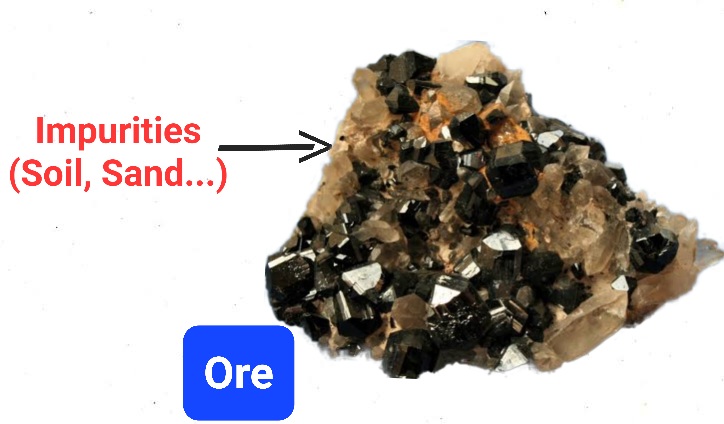
(a) Gangue : Ores are usually contaminated with large amount of impurities such as soil, sand etc. called gangue.
(b) Roasting : The sulphide ores are converted into oxides by heating strongly in the presence of excess air. This process is called roasting.

2ZnS + 3O2 →(Heast) 2ZnO + 2SO2

c)Calcination : The carbonate ores are changed into oxides by heating strongly in limited air. This process is called calcination.

ZnCO3 →(Heat) ZnO + CO2

(d) Reduction : Metal oxides are reduced to corresponding metals by using reducing agent like carbon.

ZnO + C → Zn + CO

• Refining of metals

The most widely used method for refining impure metal is electrolytic refining.


(i) Anode : Impure copper

(ii) Cathode : Strip of pure copper

(iii) Electrolyte : Solution of acidified copper sulphate

→ On passing the current through electrolyte, the impure metal from anode dissolves into the electrolyte.

→ An equivalent amount of pure metal from the electrolyte is deposited at the cathode.

→ The insoluble impurities settle down at the bottom of the anode and is called anode mud.

Corrosion

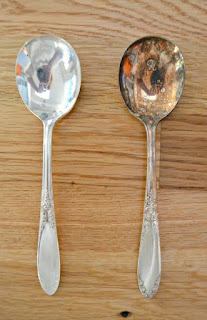
The surface of some metals get corroded when they are exposed to moist air for a long period of time. This is called corrosion.

Examples:

(i) Silver becomes black when exposed to air as it reacts with air to form a coating of silver sulphide.

(ii) Copper reacts with moist carbon dioxide in the air and gains a green coat of copper carbonate.

(iii) Iron when exposed to moist air acquires a coating of a brown flaky substance called rust.

• Prevention of Corrosion

→The rusting of iron can be prevented by painting, oiling, greasing, galvanizing, chrome plating, anodizing or making alloys.

→ Galvanization : It is a method of protecting steel and iron from rusting by coating them with a thin layer of zinc.

→ Alloy : An alloy is a homogeneous mixture of two or more metals or a metal and a non- metal.

→ Examples of alloy:

(i) Iron : Mixed with small amount of carbon becomes hard and strong.

(ii) Steel : Iron + Nickel and chromium

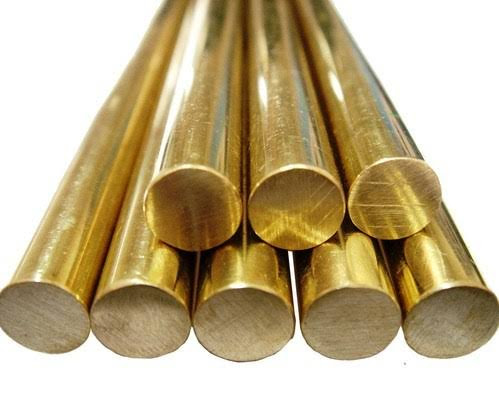
(iii) Brass : Copper + Zinc(iv) Bronze : Copper + Tin (Sn)(v) Solder : Lead + tin
(vi) Amalgam : If one of the metal is mercury (Hg).


To get ppt click here Metals and non metals Class 10 science PPT


Saturday, 6 August 2022

Ch 1 Chemical Reactions and Equations Notes

Class 10th Science

    Ch 1 Chemical Reactions and Equations       

Topics in the Chapter

  •  Introduction
  • Chemical reaction
  • Chemical equation
  • Balanced chemical equation
  • Types of chemical reaction
  • Corrosion
  • Rancidity

Introduction

→ Most of the substance around us undergoes various changes. Some of these changes are temporary with no new substance being formed. They are called physical changes.


→ Chemical changes: In certain other changes the new substance formed in which the reactant or the parent loses its identity to form new substance called product. These changes are permanent changes as we won’t get the reactant back.


Chemical Reaction

→ Chemical reaction is the process by which two or more substance react with each other to form new substance with different properties.

→ These are the following changes to determine that the chemical reaction has taken place:

(i) Change in state

(ii) Change in colour

(iii) Evolution of gas

(iv) Change in temperature

Chemical Equation

  • A chemical equation is the symbolic representation of a chemical reaction.
  • the reactants are given on the left-hand side and the products on the right-hand side.     

Magnesium + oxygen → magnesium oxide              (Reactant)                     (Product)

Balanced chemical equationI

In balanced chemical equation the number of the atoms  in the reactants side is equal to the number of atoms in the products side.

Zn + H2SO4  →  ZnSO4  + H2

3Fe (s) + 4H2O (g) →  Fe3O4  (s) + 4H2 (g)

Types of chemical reaction

→ Combination reaction: a single product is formed from two or more reactants is known as a combination reaction.

CaO (s) + H2O (l) → Ca(OH)2 (aq)

  • Calcium oxide reacts vigorouslywith water to produce slaked lime (calcium hydroxide) releasing a large amount of heat.
  • A solution of slaked lime produced by the reaction is used for white washing walls.
  • Calcium hydroxide reacts slowly with the carbon dioxide in air to form a thin layer of calcium carbonate on the walls.
  • Calcium carbonate is formed after two to three days of white washing and gives a shiny finish to the walls. 
Ca(OH)2 (aq) + CO2 (g)   →   CaCO3 (s) + H2O (l)
It is interesting to note that the chemical formula for marble is also CaCO3.

Burning of coal: C (s) + O2 (g) → CO2 (aq)

Formation of water: H2 (g) + O2 (g) →  H2O (aq)
Burning of natural gas (Methane): CH4 (g) + O2 (g) →  CO2 (g) + H2O (l)

→ Exothermic reaction: Heat energy produced in the reaction is called exothermic reaction.
 carbohydrates are broken down to form glucose. This glucose combines with oxygen in the cells of our body and provides energy. This reaction is respiration is an exothermic reaction.
C6H12O6 (aq) + 6O2 (aq) →  6CO2 + 6H2O (l) + energy 
(glucose)

→ Endothermic reaction: Heat Energy absorbed by the reaction is called endothermic reaction.
The decomposition of vegetable matter into compost is also an example of an endothermic reaction.

Decomposition reaction: single reactant breaks down to give two or more products. This is a decomposition reaction.

>White silver chloride turns grey in sunlight. This is due to the decomposition of silver chloride into silver and chlorine by light.

The above reactions are used in black and white photography.

Displacement reaction:  More reactive element displaces a less reactive element from its compound.
>Reaction of iron nails with copper sulphate solution.

Fe (s) + CuSO4 (aq) →  FeSO4 (g) + Cu (s)
Pb (s) + CuCl2 (aq) →  PbCl2 (aq) + Cu (s)

Double Displacement reaction: Exchange of ions between the reactants is called double displacement reaction.
>Insoluble substance formed is known as a precipitate. Any reaction that produces a precipitate can be called a precipitation reaction.

Na2(SO)4 (aq) + BaCl2 (aq) →  BaSO4 (s) + NaCl (aq)

Redox reaction: An oxidation-reduction (Redox) reaction is a type of chemical reaction that involves a transfer of electrons between two species.
the copper(II) oxide is losing oxygen and is being reduced.
>Reduced substance - CuO, 
The hydrogen is gaining oxygen and is being oxidised.
>Oxidized substance - H2

Oxidation: This process involves gain of oxygen or loss of hydrogen.
Ex: 2Cu + O2 --> 2CuO
The surface of copper powder becomes coated with black copper(II) oxide. This is because oxygen is added to copper and copper oxide is formed.

Reduction: This process involves gain of hydrogen or loss of oxygen.
Ex: ZnO + C →Zn+ CO
MnO2 + 4HCl --> MnCl2 + 2H2O + Cl2 

→ Oxidizing Agent is the substance which gives oxygen or gains hydrogen. Or it the substance which is reduced itself and oxidizes other.
→ Reducing Agent is the substance which gives hydrogen or gains oxygen. Or it the substance which is oxidized itself and reduces other.

Corrosion 
  • The process of slow conversion of metals into their undesirable compounds due to their reaction with oxygen, water, acids, gases etc. present in the atmosphere is called corrosion.

>The black coating formed on the surface of silver articles due to corrosion is silver scarbonate 
>green coating on copper is copper carbonate

  • Rusting:  Iron when reacts with oxygen and moisture forms red substance called rust. 
Rancidity 
  • The taste and odour of food materials containing fat and oil changes when they are left exposed to air for long time. This is called rancidity. 
  • It is caused due to oxidation of fat and oil present in food material.
  • It can be prevented by using various methods such as by adding antioxidants to the food materials, Storing food in air tight container and by flushing out air with nitrogen. 


Click here 👉 Chapter 2 Acids, Bases, and Salts Notes